Antioxidants
Antioxidants, such as vitamin C or E, are important for protecting the body's cells from harmful free radicals. Free radicals are formed by the body itself during various metabolic processes or are created by harmful external influences such as cigarette smoke, environmental toxins or UV radiation from the sun. If there are too many free radicals in our body, so-called oxidative stress occurs, which can lead to cell damage. In the Fairvital online shop you will find a large selection of well-known and proven antioxidants as well as a variety of food supplements with antioxidant ingredients.
Filter products
- Vital substances
-
Applications
- Anti-Aging
- Eyes
- Ayurveda & TCM
- Beauty
- Blood sugar level
- Intestine & Stomach
- Energy
- Detoxification
- Memory & Psyche
- Joints
- Tissue Health
- Weight loss
- Hair
- Hands & Feet
- Heart & Vessels
- Immune system
- Bones
- Liver
- Passion
- Lungs
- pH-Value
- Men's health, bladder and kidneys
- Pregnancy
- Sports
- Vegan & Vegetarian
- Digestive system
- Menopause
- Mind & Sleep
- Nervensystem
- A-Z
- SETS
- Vitalexikon
- Top & New
- Gummies
- Pets
- Offers & Vouchers
- Catalogues & Literature
- Fairvital Blog
Average rating of 5 out of 5 stars
Vitamin E is the mother of all antioxidants Vitamin E is one of the fat-soluble vitamins. Vitamin E has been considered an essential nutrient since 1968, although it has been known as a dietary component since the 1920s. Only plants can synthesize vitamin E themselves. However, since it also reaches animals via the food chain, albeit to a much lesser extent, the fat-soluble vitamin is found in all cell membranes, so that animal foods also contribute to the Cover demand. Absorption of vitamin E Vitamin E is absorbed in the upper small intestine, whereby this is always linked to fat digestion (fat-soluble vitamin). The absorption rate is increased by medium-chain fatty acids and reduced by polyunsaturated fatty acids such as e.g. B. linoleic acid, alpha-linolenic acid, omega-3 and omega-6 fatty acids, oxidized, rancid fats, laxatives and absorption disorders in the intestine. Vitamin E as an antioxidant In the human body, vitamin E is primarily involved in cell protection. As an antioxidant, vitamin E is able to protect tissue and cells from free radicals. Free radicals are very reactive substances that can occur as intermediate products in the normal metabolism of every cell. If there is an excess, this is referred to as oxidative stress. Foods with vitamin E The best sources of vitamin E are vegetable oils such as olive oil, sunflower oil, wheat germ oil and corn oil. Nuts are also good sources of vitamin E. Walnuts and Brazil nuts should be mentioned here. Fish such as mackerel, lobster and trout stand out as animal sources. Vitamin E capsules from Fairvital classic antioxidant supports cell protection Anti-aging tip small softgels, easy to swallow Large pack for the whole family gluten-free, lactose-free, fructose-free without magnesium stearate and silicon dioxide
Content: 0.3 kg (€151.50 / 1 kg)
Average rating of 5 out of 5 stars
Vitamin E oil: 100 IU per 3 drops This liquid vitamin E has been combined with lemon oil and is immediately absorbed by the skin when used topically. When ingested, it replenishes the vitamin E stores. The vegetable lemon oil used as a basis also ensures a pleasant smell and taste. You can not only use this vitamin E oil externally, but also consume undiluted, stir into drinks or mix with your food to fill the body with vitamin E from the inside to supply. Vitamin E as an antioxidant In the human body, vitamin E is primarily involved in cell protection. As an antioxidant, vitamin E is able to protect tissue and cells from free radicals. Free radicals are very reactive substances that can occur as intermediate products in the normal metabolism of every cell. If there is an excess, this is referred to as oxidative stress. Foods with vitamin E The best sources of vitamin E are vegetable oils such as olive oil, sunflower oil, wheat germ oil and corn oil. Nuts are also good sources of vitamin E. Walnuts and Brazil nuts should be mentioned here. Fish such as mackerel, lobster and trout stand out as animal sources. Vitamin E drops by Fairvital popular antioxidant supports cell protection neutralizes free radicals for internal and external use D-alpha-tocopherol with lemon oil simple application Intake independent of meals more than 1200 drops per bottle vegetarian and vegan gluten-free, lactose-free, fructose-free without magnesium stearate and silicon dioxide
Content: 0.05 kg (€279.00 / 1 kg)
Average rating of 5 out of 5 stars
Yam root with vitamins and trace elements Botanical: Dioscorea Chinese: Huang YaoZi Sanskrit: Vidarikand German: Yamsroot English: Yams root, Dioscorea The yam is one of the starchy vegetables. It is a tuber of the Dioscoreaceae family and is available in over 800 different species. The yam root is widespread in the tropics, where it is mostly cultivated as a crop. The main growing areas are currently in Africa, more precisely in Nigeria, the Ivory Coast and Ghana. However, the root is also grown in Haiti and Colombia. Under the ground, the yam usually reaches a size of 2 meters and a weight of about 60kg. Although the roots bear close resemblance to sweet potatoes, they are not related to them. While the yam is rather rare to buy in European countries, it is common in Africa, South America and the Caribbean a firm place in regional cuisine and are considered an important supplier of starch (carbohydrates). What's in the yam? The dioscorea root primarily provides complex carbohydrates, which are digested more slowly by the body and therefore do not cause blood sugar levels to spike. In addition, the root contains soluble fiber and B vitamins (riboflavin, niacin, pantothenic acid and folic acid). Vitamin C can also be found, as well as the minerals calcium, magnesium, potassium, copper, manganese and iron. The most interesting ingredient, however, is diosgenin. strong>. This is a steroid sapogenin. Steroids belong to the lipid family and have received a bad rap from abuse in the bodybuilding field. However, they are harmless in the quantities that are produced in the organism and have a number of important functions. The best-known steroid is cholesterol, from which steroid hormones such as vitamin D (calcitriol), cortisol and sex hormones are produced. Sapogenins belong to the triterpenes and are common plant substances. The wild yam extract in this product is standardized to 20% diosgenin which equals 60mg per capsule. Antioxidants Everyone has heard of free radicals by now and knows that an excess in the body can damage cells. Free radicals are highly reactive and aggressive oxygen molecules that arise as intermediate products in our metabolism and which in small amounts are even important, especially for the function of our immune system. The body is normally able to neutralize free radicals, but external influences contribute to the rapid multiplication of radicals, i.e. to oxidative stress. These include, for example, smoking, competitive and high-performance sports, UV rays and pollutants. In this case, it makes sense to supply the organism with so-called antioxidants from outside through food or dietary supplements. The best-known antioxidants are vitamin C and E, the carotenoid beta-carotene and the two trace elements selenium and zinc, which we use in this product with the Wild Yam Root. Yam root capsules from Fairvital highly dosed 300mg wild yam extract per capsule standardized to 20% diosgenin (60mg per capsule) Anti-aging tip supports cell protection boosts the immune system contributes to beautiful skin with vitamin E, vitamin C, beta-carotene, zinc and selenium vegetarian and vegan gluten-free, lactose-free, fructose-free without magnesium stearate and silicon dioxide
Content: 0.053 kg (€300.94 / 1 kg)
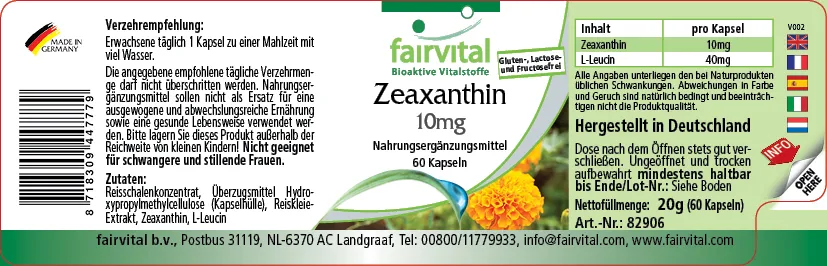
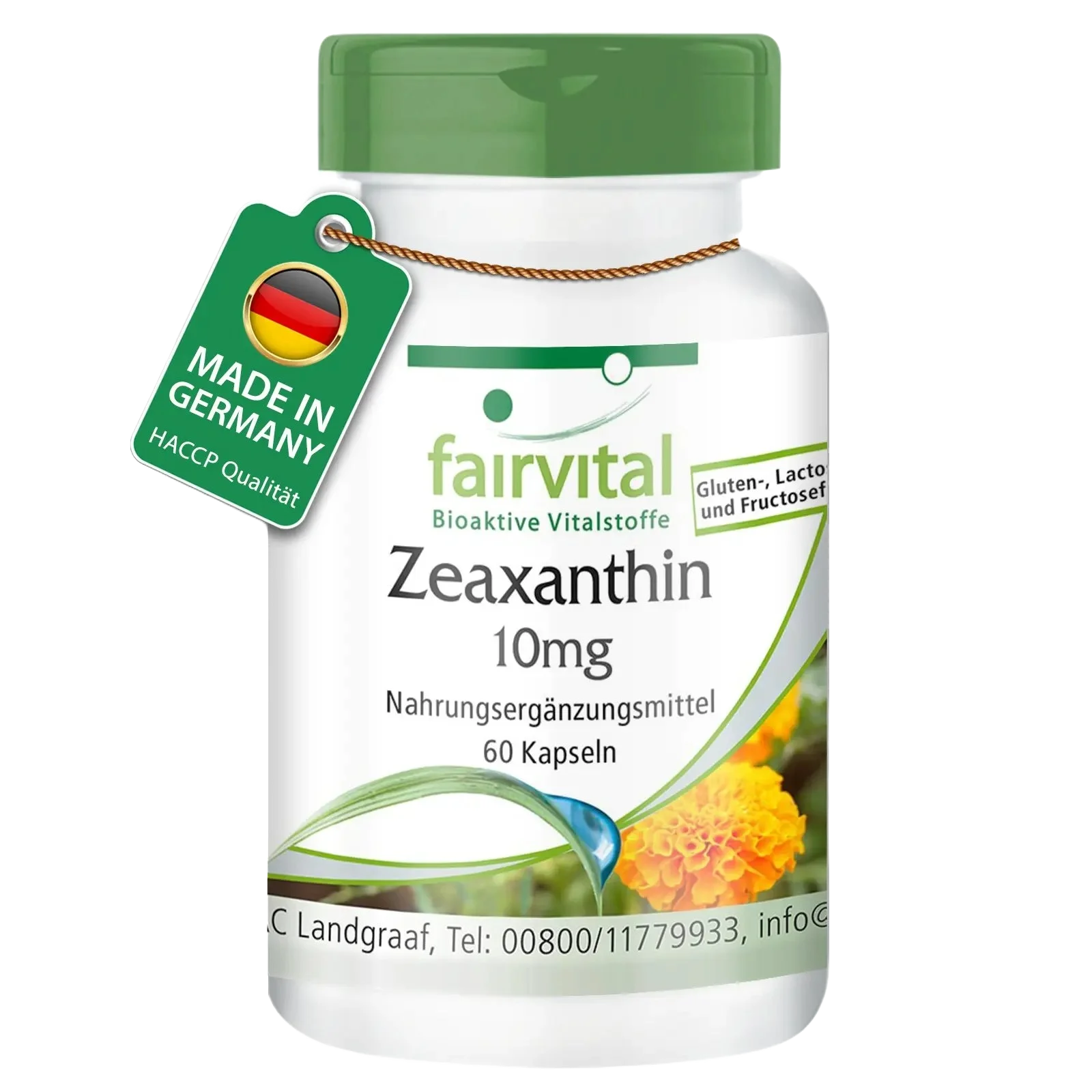
High-dose zeaxanthin This dietary supplement from Fairvital provides you with high-dose, natural zeaxanthin from day flower extract. One capsule contains 10mg zeaxanthin. Bioavailability Zeaxanthin is a natural, orange-yellow plant pigment from the group of carotenoids and the group of phytochemicals. Over 800 different carotenoids are now known, 50 of which have provitamin A activity, which means that they can be converted in the body into vitamin A, including the well-known beta-carotene. However, unlike this, zeaxanthin cannot be converted into vitamin A. What all carotenoids have in common are their antioxidant properties and fat solubility. For this reason, it makes sense to always take food supplements that contain carotenoids with a meal or to always eat fruit and vegetables with some oil or butter, so that the valuable vital substances can be optimally absorbed by the body. Zeaxanthin in food As a phytochemical, zeaxanthin is primarily found in plant foods, with relatively high levels found in green leafy vegetables such as spinach, collard greens, lettuce and parsley. Other good sources of zeaxanthin are red bell peppers, corn and tangerines. Zeaxanthin can also be present in animal foods via the food chain, for example egg yolk or salmon. Occurrence in the organism In the body, zeaxanthin is always present together with lutein, since the two carotenoids are structurally hardly different and are closely related to each other. It can be found in all tissues and organs in different concentrations: e.g. in fat tissue, liver, testicles, ovaries, lungs, muscles or in the skin. Most interestingly, it is present with lutein in the yellow spot (macula) of the eye and can also be found in the eye lens. Zeaxanthin by Fairvital highly dosed 10mg zeaxanthin per capsule natural carotenoid obtained from marigold extract present in the yellow spot of the eye Antioxidant vegetarian and vegan gluten-free, lactose-free, fructose-free without magnesium stearate and silicon dioxide
Content: 0.02 kg (€697.50 / 1 kg)