Frankincense, turmeric and myrrh are among the plant raw materials with the longest tradition in the world. Their history goes back several thousand years and is closely linked to the cultures of the Middle East, North Africa and Asia. While frankincense and myrrh were traded as precious resins in antiquity, turmeric is known above all from Indian cuisine and the Ayurvedic tradition. Together, the three plants bring together very different natural ingredients and botanical features.
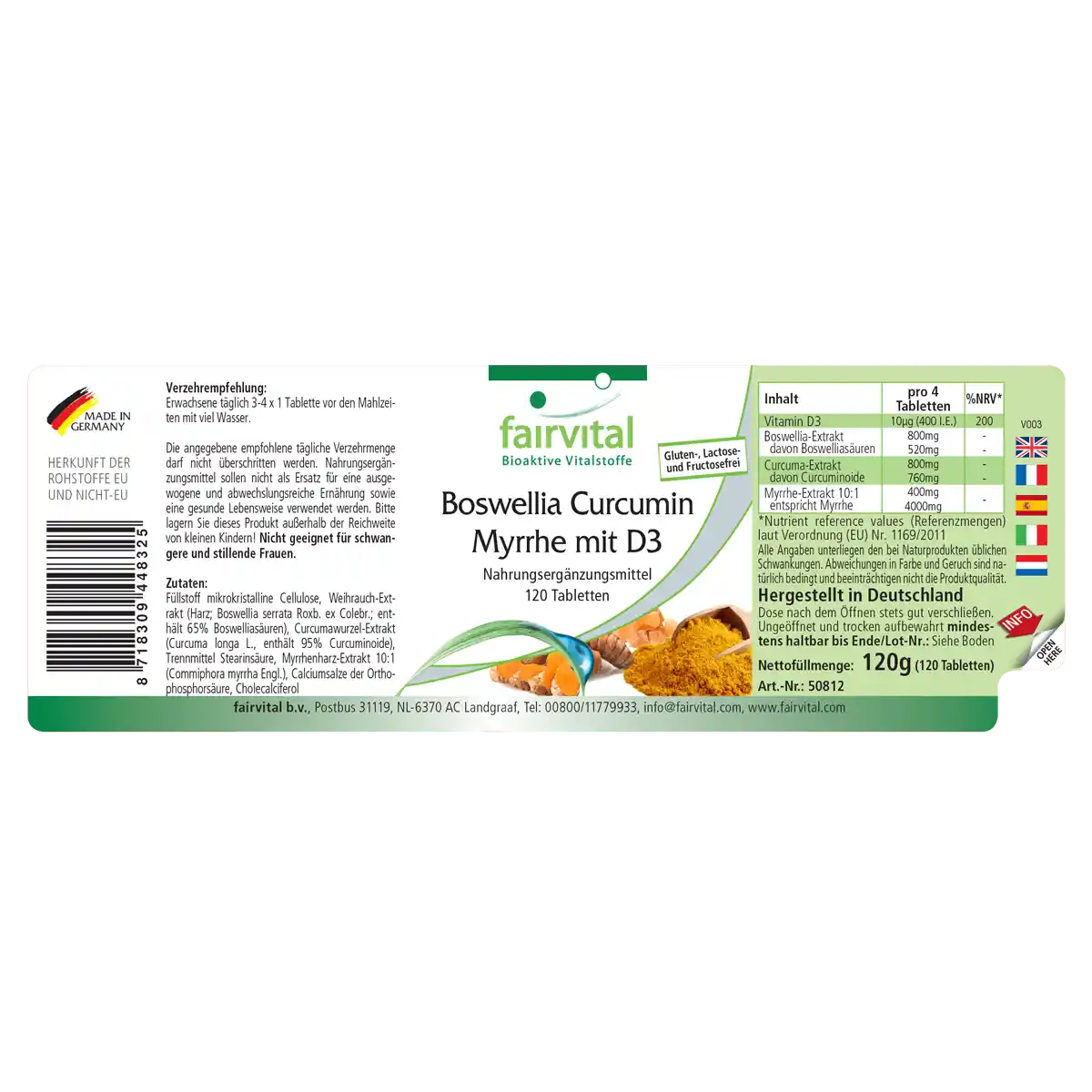
Frankincense (Boswellia serrata) is obtained from the resin of certain frankincense trees. To do this, the bark of the tree is carefully scored so that a milky resin sap emerges, which hardens in the air into solid pieces of resin. These are traditionally referred to as frankincense. Characteristic are the boswellic acids it contains, which belong to the group of pentacyclic triterpenes. Frankincense was already a sought-after commodity in antiquity and was transported along far-reaching trade routes. The Fairvital boswellia extract is standardised to 65 % boswellic acids.
Turmeric (Curcuma longa) belongs to the ginger family and originally comes from South Asia. Its underground rootstock, the so-called rhizome, is used above all. Turmeric owes its intense golden-yellow colour to the curcuminoids it contains, which include curcumin in particular. In India, turmeric has been used for centuries as a spice, a colouring and a component of traditional plant preparations. The well-known spice blend curry also often gets its characteristic colour from turmeric.
Another special feature is myrrh, the aromatic resin of the myrrh tree (Commiphora myrrha). The plant grows mainly in dry regions of north-east Africa and the Arabian Peninsula. As with frankincense, the resin is obtained by making incisions in the bark and then dried. Myrrh contains essential oils, resin components and various terpene compounds, among other things. Together with frankincense, it was one of the valuable commodities of antiquity and was also traditionally used as incense.
The combination is supplemented by vitamin D3 (cholecalciferol). The human body can produce this fat-soluble vitamin itself with the help of sunlight. It contributes, among other things, to the maintenance of normal bones and to the normal function of the immune system. Fairvital Boswellia Curcumin Myrrh Tablets combine standardised frankincense and turmeric extracts with a concentrated myrrh extract and vitamin D3.